Showing posts with label Books. Show all posts

5.12.2015

Sometimes, I Read Things

Last fall, I realized that if I didn't change certain habits, Kyle was going to walk in one day and find me mindlessly staring at a Daniel The Tiger episode while my brain, in liquid form, was puddled about my feet.

In an attempt to keep that from happening, I have been reading more this semester. I never had a specific goal in mind, but with the general guidelines to avoid novels and pick up a book every once in awhile that was outside of my normal interests.

Not because I think novels are evil or beneath me, but because they usually draw me into a hole where I eat, sleep, bathe, and drink as little as possible until I'm finished with them. Since I am largely responsible for the existence of an almost three and one year old, I figured this was slightly unwise.

Here are the books I've read and my very intelligent & cultured opinions of them:


Jesus Feminist // Sarah Bessey

Several years ago, this would have been my favorite book in the entire world. I imagine I would have waved it underneath everyone's noses and demanded they read it so it could change their lives too.

It may have helped me avoid a few unnecessary detours on my "Jesus and The Church and Women" journey. Bessey does an amazing job of approaching this topic with a lot of grace and an, "Everyone just calm the heck down and let's have a conversation about this, shall we?" mentality. I wish I could have read it when my soul felt a little dry and brittle from going full DaVinci Code on Scripture, trying to squeeze hidden meanings out of the Greek and scrape absolutes from verses that bless us all, just don't seem to have it.

All that being said, I didn't enjoy this book as much as I wanted. I felt lost, at times. In the back of my mind I kept thinking, "Yes... that's all so good, but what's the point of saying all of this, again?"

In this season, I've come to a place in my own journey of wanting more practical, hands-on, tangible things to chew on. This book, at least for me, didn't really provide that. Analogy time? It felt a little bit like a cup of hot tea with lemon when what I wanted was a protein shake.

Fierce Convictions // Karen Swallow Prior

First, I love biographies. Some people don't, I get it.

Second, I love history. Some people don't, I get it.

These two facts predisposed me to enjoy this book. It's the story of Hannah More. Who was a prolific social justice writer in Britain during the turn of the nineteenth century. She was a peer of William Wilberforce, and on top of being involved in the abolitionist movement, had her hand in well, pretty much every social issue of the time. I found it interesting, though, that More was pretty conservative. She presented a dynamic personality to read about. I didn't always like her that much, to be honest. There were times I thought, "I don't know if I'd really want to be friends with you;" however, what she accomplished demands respect. In her time, it was not for nothing that a single middle-class woman of less than stellar parentage come to a place where she was financially independent. And, obviously, her role in abolishing the slave trade is an amazing story.

It's definitely worth the read, but if you're not one to pick up a history book and naturally enjoy it, this book may be a bit dry.

Unbroken // Laura Hillenbrand

I didn't read Seabiscuit, because I find it hard to engage in stories that center around animals. This may make me an unfeeling block of no emotions, but it is what it is. To this day, even after becoming a parent, I do not understand the hype over Finding Nemo.

ANYWAY, I say all that so you can understand the impact of this next sentence: After reading Unbroken, I might read Seabiscuit.

You see, Seabiscuit, too, was written by Hillenbrand, and Unbroken might be my favorite book I've read this entire semester. It's the biography of Louis Zamerpini, a Japanese POW survivor from World War II. The story itself is amazing, but in the hands of a less capable writer it could have easily crumbled; or, heaven forbid, had it been made straight into a movie and the story never given the due diligence a book can afford to give it. I'm not even going to tell you anything about it because I don't want to ruin anything.

Okay, yes I am: at one point Zamperini, while holding his breath underwater to escape being shot at, punches sharks in the face. IN. THE. FACE.

More analogies? The movie was car repair shop coffee to the book's french press. Do. Not. watch the movie without reading this book. If you have to choose one, read the book. Please, for me. Thank you.

Maude // Donna Mabry

I have a rule about sad biographies or memoirs: I will read ones written by Frank McCourt, and that's it.

Because a sad biography, no matter how fascinating, makes my heart feel like a flat balloon for like three days after I'm done with the book. Unless it's written by Frank McCourt, who is incredibly good at writing purpose into pain, in my humble opinion. Maude kind of ended like this:

So she laid down and thought about how if she had been a better/different/braver person her life would not have absolutely sucked. The End.

I won't go all the way and say that I shouldn't have read it, because I enjoyed the realistic look at a woman's life during this specific time period in our country, but it was by far my least favorite book on this list.


I Want My Hat Back // Jon Klassen

My sister got this for Zeke last Christmas, I believe. We pulled it out sometime in February and it is hands down my favorite children's book of the moment.

Probably in part (spoiler alert!!) because the bear totally eats the rabbit who stole his hat. Finally, a book that more appropriately displays a predatory animal's capabilities.

Plus the illustrations are not a visual equivalent to eating an entire can of icing. I enjoy kids books that are a little less stimulating.


The Wounded Heart // Dr. Dan Allender

This was my intense read of the semester. It took me the longest to finish because of the topic. Dr. Allender does an excellent job of communicating the compassion he has for victims of childhood sexual abuse, all the while telling their stories with respect.

It's an excellent book, I just had to walk away from it every once in awhile to remind myself that the world can be a good place too, as well as one that is full of very difficult, evil things.

I'll be frank, having not gone through sexually abusive experiences during my childhood, I have often been left grasping for things to say when the topic comes up with people that have. I want to emphasize that by no means was my desire to equip myself to attempt to seriously counsel people through processing something like this. That is for people (like Dr. Allender) who have given their lives to the study of helping people find healing & wholeness in the wake of sexual abuse. However, being in a job that involves talking to people about vulnerable things, where this has and will continue to come up, it felt irresponsible to not familiarize myself with it in some way.

I say all of this because if you are in my shoes, I would highly recommend this book. Empathy is in high demand and low supply these days, and for me at least, this book helped increase my empathy for those who were sexually abused as children. I also feel like it made the topic less scary to approach. Just as difficult, certainly, but less scary. I imagine it would help those who did experience sexual abuse as well, but can't speak with the utmost confidence because of my ignorance. In summary: do not pick up if you're needing something emotionally light & airy, but if you have little to no knowledge of sexual abuse and would like to educate yourself on the effects sexual abuse has on a persons mind, body, & soul, it's worth a read.
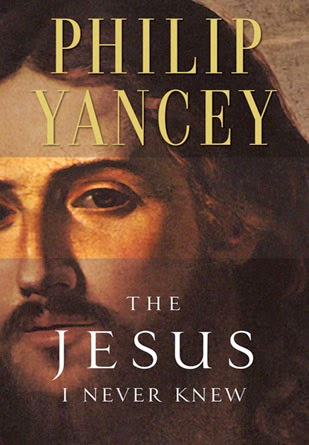

The Jesus I Never Knew // Phillip Yancey

I listened to this book, technically, rather than reading it, but I still count it. Several years ago I read Yancey's, What's So Amazing About Grace? and loved it. Ever since then I've wanted to read more by him but never got around to it.

I'm glad I did. For me, the word for Yancey's writing is refreshing. Something about the way he approaches Jesus feels like fresh air blowing through a stuffy room. I appreciated the way he highlighted Jesus' humanity, never sacrificing his deity in the process.

It's hard to write about Jesus. None of us have ever met him in the flesh, and he is - literally - the only human of his kind. Completely God, completely man. One of us, and not, all at the same time. He was holy & hungry. I felt closer to Jesus when reading (listening to?) this book, which is, obviously, a good thing.

Bread & Wine // Shauna Niequist

This was my first Shauna Niequist book, and fell into the category of "things I wouldn't normally pick up to read." She has a specific style that I happen to enjoy every once in awhile. That is, it feels like a conversation you're having with a friend that may go somewhere or it may not, but it doesn't matter because the point is to just be - not accomplish a task.

It wasn't a recipe book, at all, though it did have recipes. It felt like a combination of a spiritual memoir, a book about food and the place it has in our culture, and a recipe book all in one.

What I enjoyed was her vulnerability. She was honest about her shortcomings with food and, even more so, honest about the fact that she doesn't have everything figured out yet. She also discusses her journey through trying to conceive while three miscarriages. There were times I wished I could cry right alongside her. I think being able to write about hard things in a way that moves people to empathy, but isn't despairing or hopeless, is hard to do - but she did it. She also made me laugh out loud, and at the risk of sounding unbelievably pretentious, whenever a book can make me do that I consider it a win.

Abba's Child // Brennan Manning 

Well, I cried a lot. Recently I felt prompted by the Lord to dig deeper into the meaning of grace. I have been wanting to pick up Brennan Manning's books for awhile, and as I was reaching for a theology book to delve into grace I felt the Lord specifically put Manning's name on my heart.

I'll let you know if I should have started with The Ragamuffin Gospel after I read it. For now I'll just say, that if you have a hard time connecting with God, if seeing Him as a kind father is something you are really thirsting for, this is a good book to read.

However, I think this is also a "right place, right time" book. Where I'm at is a right place and right time for me. So if you pick it up and it doesn't do much for you, try again in a year. Just make sure you definitely try again.
The Reason for God // Timothy Keller 

Things that fall along the lines of theology and apologetics waken my heart. I have always been a student and always will be. I connect to God deeply through the study of His Person and His Word. Some of my most intense moments of worship have been over a church history book or during an exegetical teaching. I understand this is not everyone's cup of tea, so my perception of this book may be biased.

If you have an agnostic friend that genuinely is curious about this whole "God" thing, give them this book.

If you have a Christian friend that is going through a period of intense doubt, this book may not be what they need, but it might be worth them picking it up.

This was the first book I've read by Keller. I've read his wife's work before, and what I appreciate about both of them is their methodical approach. To say they're books are well thought out is an understatement.

So, if Bread & Wine was a long conversation, this book feels more like a college lecture -a really good lecture, like the kind that make you want to give your whole life to study whatever the professor is lecturing about. Both are good and needed, but very different.

What books have you been reading lately? I love any and all recommendations. :) 

7.29.2013

Jesus, Justice, & Gender Roles :: Kathy Keller

I've read a lot of blog posts both for and against separate gender roles within the church, and this sorta makes me an expert, except not.

This year, I decided enough is enough. Rather then just sit around feeling everything, I was going to do some actual research and dig into this topic a bit. (No knock against blogs, it's just that I've found books allow more time for an argument to be developed and adequately defended - on either side of any given issue.)

This is my first Keller book. I'd always heard great things about both Kathy & her husband's writing, so I was excited to read it.

First, I want to emphasize that the questions this book answered for me it may not answer for others. The topic of gender roles within the church is such a deeply personal one, particularly (in my opinion) for women and even more particularly (and even more in my opinion) for women who feel called to vocational ministry.

The point is, Keller just happened to address some of the very questions that I had been asking in the way that I needed them answered. She may or may not do the same for you.

Second, the reason I didn't choose to start my "digging in" with a book that has an egalitarian leaning is because I already have an emotional bias that way. It felt a little too *convenient* for me to start with something that I knew I'd want to hear.

So, onto the actual review:

I appreciated Keller's story, she has been on either side of the argument at different points in her life. I'll use her own words:

"The question is not academic for me. I wrestled deeply and personally with this issue as a woman who was once preparing to be ordained in the United Presbyterian Church (USA). Everywhere I have ministered since then, I have felt like a woman without a country. In some places I have been looked upon with suspicion as a 'raving feminist' because I encourage women to teach and lead, and I do so myself. In New York I have been called 'self hating' and worse because I continue to believe that God gave us a good gift when he created complementary gender roles for men and women."

I appreciated how Keller organized the book. She separated it into two sections: hermeneutical imperatives and personal journeys. This appealed to me because it seemed she recognized that answers in one area may not yield answers or clarity in the other.

I'm going to give a couple of the most nagging questions I've had regarding this issue and how Keller answered them. In no way will this represent everything she said, just what impacted me the most.

Question One: I see women that seem to be gifted in extremely similar ways to male counterparts who are pastors... so why can't they be pastors? 

"In one unforgettable lecture, Elisabeth Elliot ... taught me to distinguish between gifts and the roles in which those gifts might be used. She announced to her class of both men and women that she had better gifts for being a pastor than most of the men in the class, possibly the entire seminary. She knew the Bible in multiple languages, had vast experience in expositing it, had the maturity bought through suffering to speak with compassion to others, and on and on. 'However,' she said, 'God has not called me, as a woman, to exercise those gifts in a pastoral role. I am called to use them, but why should they only be valuable if used in one particular role, the ordained ministry?'"

Question Two: I've read that 1 Timothy 2:11-12 should be interpreted to only apply to the church in Paul's day. So, what do we do with that? 

"More tenacious has been the explanation that 1 Timothy was written solely to the church in Ephesus, where a thriving cult of Diana had long existed. Women accustomed to goddesses and priestesses came into the church with an inflated view of their status; as a result they caused problems among the congregation. Paul's words in 1 Timothy were written only for that particular situation, and they do not apply to us today.

...[however] everything that Paul (or any other biblical author) wrote was to a specific group of people with a specific situation in view. Nothing in Scripture is addressed to 'the church throughout the centuries, in whatever time, place, or cultural situation you find yourself.' In compiling the canon, it was a presupposition that God's truth was applicable to the church throughout history because God himself is immutable, omniscient, and omnipotent - thus capable of revealing himself at the proper time and through the agents he had prepared to carry his words."

I won't keep quoting, but it's worth mentioning that Keller - based on other Scripture - doesn't think Paul is saying women can't speak at all. In fact, she seems to think that women teaching isn't an issue - rather women teaching with the authority that is had only by elders. She defined this authority as having two trademarks, so to speak: "the final judgment of truth versus heresy, and the power of discipline, that is, the power to remove from the church body anyone who taught in defiance of the approved apostolic oral tradition."

Question Three: But it all seems so unfair. To put it bluntly, it's hard not to hear, "your desire to be in this ministry role is wrong not because of a lack of character, ministry skills, or doctrinal understanding, but because you're a woman." What do I do with that?  

"The shameful fact is that in many churches the Scriptures have been interpreted so as to prevent women from exercising many, if not most, of the gifts of leadership and teaching, exhortation, encouragement, and so on, that the Holy Spirit has given to them. Not only does this disenfranchise half the church; it amputates the body of Christ.

An amputated body is a wounded body, and many women have been crushed by being told that their gifts, gifts given by the Holy Spirit, are not allowed, not wanted, even nonexistent or imaginary. No wonder the discussion is so often opened with the words, 'This is a justice issue!'

I have heard this cry from women with whom I'm having a quiet discussion, and from women who are weeping. I've heard it in small groups and had it shouted to me in large ones. While I understand the frustration from which this sentiment is born, it has nevertheless been my task, at some point in our conversation, to explain that, no, it is not primarily a justice issue, but first it is a theological issue. What did God say? Why do we have to obey it? How can we do it? .... life takes on meaning and matures when you conform to God's will, not when you get to do what you want to do."

You know, I didn't agree with every word she wrote, but every word Keller wrote made me think, and that is what I'm looking for as I dig into this topic. I'd recommend the book to anyone who is wanting some insight into the complimentarian view of gender roles within the church.

It's a hard pill to swallow, but I had to admit that, like all humans, women who wrestle with their roles within the church may want things that God didn't intend them to have. This was a profound - if obvious - revelation for me. Maybe I just assumed because my desires had to do with serving the church, they could not be wrong.

*facepalm*

I'm not saying that this book resolved the issue for me completely, but it did help me realize that everyone (man and woman) will probably come to a point in their life where we must trust the goodness of God in the face of both unanswered questions and questions whose answers we don't particularly like.

Above all, humility must be had. We must be willing to be wrong before we can defend what is right.

I'd love to hear your thoughts/questions about the book, and any recommendations for other books about this topic. :)

6.19.2013

Heaven, by Randy Alcorn

Around New Years, I made a few resolutions. One of which was to read & review a book once a month. So, here I am starting half a year late, but starting nonetheless.  

I don't find myself a particularly apt critic of books, but I do know that a good writer must read, and read a lot, and then let it simmer and steep until it's changed us. I might even add a few posts about the books I've read that have impacted me the most. 

***

Heaven :: Randy Alcorn

Pros: Thought-provoking, consistent thoughts & arguments, and he certainly wasn't shy about using Scripture

Cons: In this case, not so much a "con" as a heads-up. It's long.... like, REALLY long.

It took me about six and a half months to finish this book. Not exactly what I would call a light read. 

Which isn't a bad thing, unless (like me) you go into it expecting something not as textbook-y and are out of practice in reading anything deeper than board books to your one year old. 

Also, I was forced to take a break and read other things like the Hunger Games series, which added a little time. 

Now, to discuss the actual content of the book. 

The topic of heaven lay dormant in the back of my mind for the majority of my walk with Christ, and my beliefs about it were pretty succinct: heaven is a physical place, the presence of God is there, & those who follow Jesus go there after death. Outside of believing this, I never pursued the topic much.  

Probably because I dreaded the thought of having this conversation & would avoid it if at all possible: 

"So, you believe in heaven, eh? And hell, too? Tell me, what's it like to be out of touch with reality?" 

I realized this avoidance couldn't go on for much longer, after all, no follower of Christ ever did any favors to Christianity by not understanding their beliefs; thus, the choosing to read a book about heaven in hopes of wrestling through the difficulties of the topic. 

That being said, this book is not so much an argument for heaven as it is one man's interpretation of what the Bible says about it. 

Alcorn's theology of heaven had the most impact on me. He tied the death & resurrection of Jesus to the doctrine of heaven in an incredibly powerful way. He argues that the redemption which occurred at the cross goes much higher & deeper than we often think. It will, says Alcorn, not only redeem humanity, but creation itself. 

Alcorn brought me a step or two closer to understanding the magnitude of the cross. More than one chapter ended with me humbled & my heart overwhelmed with the grace of Jesus. 

After explaining his theology of heaven, Alcorn enters into a question & answer part of the book. Though I may not have agreed with all of his thoughts, many of his answers to the questions he posed challenged my perception of heaven. (Ex: Will things created by human hands - art, books, music - continue on to heaven, only in a redeemed form?) 

Looking back, I could have skimmed through the second part of the book, read the questions & answers that most appealed to me, and skipped the others. This would have cut down quite a bit of reading. (In saying this, I would not recommend skipping any portion of the first section. It lays a necessary foundation to enjoying the rest of the book.)

Finally, in the third part of the book, Alcorn gives a final encouragement about "living in light of heaven." He reiterates his emphasis on redemption & how the doctrine of heaven should deeply impact a believer's life. It served as a great capstone. 

I would recommend anyone interested in heaven read this book, but slowly. It left me more excited about eternity, and reminded me of the ramifications of being a follower of Christ. By being one, I am declaring that this world, currently, was not as it was intended to be and this is not the end of the story. 

And some (many?) people will call that crazy, but that's the thing about the Gospel (and therefore, heaven), it is crazy. 

9.11.2012

Motherhood, Mission Fields, & A Book Review

Last Mother's Day, a link to this blog post about motherhood landed in my inbox.

After reading it, I wanted to go climb Mount Everest or run twenty miles, but instead I sat on my couch and wept because I was eight months pregnant. 

It was the first time someone had described motherhood in such a way that left my heart feeling lighter and unburdened. I love my son to the moon and back, but I (frankly) was scared at the thought of children and always felt like I'd have to give up doing what I loved in order to have them. So, when I found out the same women wrote a book about motherhood I couldn't wait to get my hands on it.

(I promise I'll get to the book review part in a second minute...)

Now, after actually having a baby, my views have somewhat altered.

I wonder if I have misunderstood the phrase, "motherhood is your calling." 

I have a hunch it all boils down to semantics, but in our culture the word "calling" seems to have become synonymous with, "the reason you exist." I have to remind myself that it simply untrue. Jesus is the reason I'm here - to glorify Him. My calling is merely the business He gave me to do while I'm on this earth. 

Also, there's this belief floating around inside of me that our "callings" usually tend to be things we feel most alive doing. So.... what if what I feel most alive doing isn't being a mother?

This may be a narrow audience, but these thoughts are mostly spoken on behalf of the group of women who feel like God has stirred them to pour their life into a mission field outside of motherhood, but who still want children and are scared that they will have to sacrifice one for the other.

Maybe they feel (as I did) scared (and are even dealing with resentment?) about having to completely give up a God-given passion, and simultaneously guilty and sad about the thought of purposefully not having children.

Here is what I know:

I love my son, and cannot believe God chose me to be his mother. Sometimes I think being a parent is about realizing how undeserving I am of such a gift ... and Z can't even have a conversation with me yet! 

However, God did call me to do something apart from, but not better or more important than, motherhood.

I don't think motherhood is as clean and cut as we'd all like it to be. Whether defining it as the primary and most important role a woman can have OR seeing it as a burden that will keep you from accomplishing life goals. 

Please, please... thoughts on motherhood? Whether you're not a mom yet and are wading through some similar feelings, maybe? Or a seasoned veteran?

Rachel blogs at Femina
And finally, I just finished Rachel Jankovic's, Loving the Little Years, and really enjoyed her thoughts on motherhood. She has several (read: SEVERAL) tiny people. I can't say that I agreed with everything in the book, but I appreciated it because her thoughts came from someone right in the thick of it.

Pros: 

Short chapters. The longest one may have been five to six pages, some were as short as two. This is very conducive to actually reading while raising children.

She focuses on the heart. One of my favorite thoughts was realizing that when it feels like the kids need a spanking, chances are you're the one that needs the spanking. She has such a grace-filled approach to parenting.

She offers practical examples. Sometimes when books are all theory it can be disheartening. She does a great job of offering a few real-life stories that show how some of she and her husband's parenting practices play out.

Cons: 

Very Direct. I'm a big fan of tentative statements and there didn't seem to be a ton in there; however, when you have a ton of small children running around I imagine there isn't a lot of time to condition every thought you have.

If you know of any other books on motherhood, please recommend! :)

Happy Tuesday. 

3.30.2011

Truth: I love new books

Most of my impulse shopping involves books, shoes, scarves, & caffeinated beverages.

Last night I stumbled across this video about a new book. After watching, I clicked my way to Amazon and bought it.

The title is "Half the Church: Recapturing God's Global Vision for Women." One of the reasons I went into full-time ministry was to help women understand God's heart toward them, and there's a lot of women out there I can learn from who have way more experience and wisdom regarding that topic.

I'll let you know what I think of the book as soon as I finish reading it!

6.21.2010

Excerpt:: The Voyage of the Dawn Treader - C.S. Lewis


Every once in awhile I'll share an excerpt, a video, or just a picture that does a much better job of describing what I'm learning and where I'm at than I would. I haven't gotten to finish this book, but I loved this scene. This exchange between Eustice & Aslan made me feel as though C.S. Lewis had read the past six months of my journal and then wrote a story about it. 


For a small frame of reference: Eustice, the dragon, began the story as a boy, though an obnoxious, opinionated, conceited boy who refused to admit or even recognize any of his own flaws. He was selfish to the extreme. Lewis created the perfect character of someone who is ruled by nothing but their own will and desire. Here, Eustice is telling Edmund (his cousin) how he had turned back into a boy and what had caused the change in him. 


"I looked up and saw the very last thing I expected: a huge lion coming slowly toward me. And one queer thing was that there was no moon last night, but there was moonlight where the lion was. So it came nearer and nearer. I was terribly afraid of it. You may think that, being a dragon, I could have knocked any lion out easily enough. But it wasn't that kind of fear. I wasn't afraid of it eating me, I was just afraid of it - if you can understand. Well, it came closer up to me and looked straight into my eyes. And I shut my eyes tight. But that wasn't any good because it told me to follow it." 

"You mean it spoke?" 

"I don't know. Now that you mention it, I don't think it did. But it told me all the same. And I knew I'd have to do what it told me, so I got up and followed it. And it led me a long way into the mountains. And their was always this moonlight over and round the lion wherever we went. So at last we came to the top of a mountain I'd never seen before and on the top of this mountain there was a garden - trees and fruit and everything. In the middle of it there was a well.


"I knew it was a well because you could see the water bubbling up from the bottom of it: but it was a lot bigger than most wells - like a very big, round bathe with marble steps going down into it. The water was as clear as anything and I thought if I could get in there and bathe it would ease the pain in my leg. But the lion told me I must undress first. Mind you, I don't know if he said any words out loud or not. 


"...I suddenly thought that dragons are snaky sorts of things and snakes can cast their skins. Oh, of course, thought I, that's what the lion means. So I started scratching myself and my scales began coming off all over the place. And then I scratched a little deeper and, instead of just scales coming off here and there, my whole skin started peeling off beautifully, like it does afer an illness, or as if I was a banana. In a minute or two I just stepped out of it. I could see it lying there beside me, looking rather nasty. It was a most lovely feeling. So I started to go down into the well for my bathe. 


"But just as I was going to put my foot into water I looked down and saw that it was all hard and rough and wrinkled and scaly just as it had been before. Oh, that's all right, said I, it only means I had another smaller suit on underneath the first one, and I'll have to get out of it too. So I scratched and tore again and this under skin peeled off beautifully and out I stepped and left it lying beside the other one and went down to the well for my bathe. 


"Well, exactly the same thing happened again. And I thought to myself, oh dear, how ever many skins have I got to take off? For I was longing to bathe my leg. So I scratched away for the third time and got off a third skin, just like the two others, and stepped out of it. But as soon as I looked at myself in the water I knew it had been no good. 


"Then the lion said - but I don't know if it spoke - You will have to let me undress you. I was afraid of his claws, I can tell you, but I was pretty nearly desperate now. So I just lay flat down on my back to let him do it. 


"The very first tear he made was so deep that I thought it had gone right into my heart. And when he began pulling the skin off, it hurt worse than anything I've ever felt. The only thing that made me able to bear it was just the pleasure of feeling the stuff peel off. You know - if you've ever picked the scab of a sore place. It hurts like billy-oh but it is such fun to see it coming away." 


"I know exactly what you mean," said Edmund. 

"Well, he peeled the beastly stuff right off - just as I thought I'd done it myself the other three times, only they hadn't hurt - and there it was lying on the grass: only ever so much thicker, and darker, and more kobbly looking than the others had been. And there was I as smooth and soft as a peeled switch and smaller than I had been. Then he caught hold of me - I didn't much like that for I was very tender underneath now that I'd no skin on - and threw me into the water. It smarted like anything but only for a  moment. After that it became perfectly delicious and as soon as I started swimming an splashing I found that all the pain had gone from my arm. And then I saw why. I'd turned into a boy again."